I peed on 200 ovulation strips before I figured out what my cycle was actually doing.





By month nine of trying, my bathroom counter looked like a lab tech's reject pile. A drawer of pink-line strips. A digital pen that beeped. A wrist tracker on the charger. A subscription app on my phone that kept telling me I'd ovulated on a Tuesday I'd been on a plane. And in spite of all of it, the only thing I actually knew about my own cycle was that I didn't really know my own cycle.
Here's the thing about the 30s. You can read every book, follow every fertility account, eat the seeds in the right week, and still end up holding a strip in the bathroom at 6am wondering if the line was darker yesterday or if you're imagining it. The data is supposedly everywhere. The answers somehow are not.
I tried six different ways to figure out what my hormones were doing. Five of them sold me the feeling of tracking without actually measuring anything. The sixth was the only one that gave me a number for the question I'd been asking for nine months. This is what I learned.
1.Cheap LH strips and the pink-line guessing game

I started where almost everyone starts. A pack of fifty strips off Amazon for twenty dollars, the brand with the smiling face on the packaging. Pee in a cup. Dip the strip. Wait three minutes. Hold it up to the bathroom light and try to decide if the test line is darker than the control line. Some mornings I genuinely could not tell.
The internet does not help here. There are entire subreddit threads dedicated to women uploading photos of strips and asking strangers to vote on whether they're peaking. I posted one once. Eleven people said yes. Six said no. Two told me to throw it out and retest in four hours.
I learned later why the strips felt so unreliable. They show qualitative LH only, the surge that's supposed to precede ovulation. They don't tell you whether you actually ovulated. They don't tell you the magnitude of the surge. They don't show you your estrogen build-up, which is the actual signal that the fertile window has begun. They give you one slice of one hormone and ask you to draw a cycle out of it.
A line that's darker than yesterday's is not the same as a number you can trust.
FSA/HSA eligible · 30-day return on unopened kits · 1-year monitor warranty
2.The period app that predicted ovulation on a day I was on a plane

When the strips got demoralizing, I downloaded the apps. Not one. Three of them, in case one was wrong. I logged my period, my mood, my cervical fluid, the test strips, the sex, the sleep. The dashboard gave me a beautiful little chart with a green window and a tiny target inside it that said peak fertility today.
The peak day moved every cycle. One month it was Day 14. The next it was Day 19. The third it was Day 11, which the app announced to me while I was on a delayed flight to Denver, eating airport pretzels, definitely not ovulating. The apps weren't measuring my body. They were running a moving average on the dates I'd typed in, then drawing a confident line across an unconfident pattern.
Predictions aren't measurements. The app told me what an average 28-day cycle looks like. I do not have an average 28-day cycle. The model thought it knew me. It was making it up.
Predictions aren't measurements. An app cannot see what your hormones are doing today.
FSA/HSA eligible · 30-day return on unopened kits · 1-year monitor warranty
3.The digital reader and the smiley face that never came

Then I bought the digital one with the smiley face. Twenty-five dollars for a pack of ten sticks. The promise was that you didn't have to interpret the line at all. The pen would just tell you. Flashing smiley meant high. Solid smiley meant peak. No staring at a strip in the bathroom mirror, no asking the internet, no second-guessing.
I went through twelve sticks before I got a solid smiley. The cycle after that, I never got one at all. Same thing the cycle after that. I called the support line and a very patient woman explained that the digital reader is still measuring LH, just digitally. If your surge is small, brief, or out of the test window, the smiley simply doesn't appear. The hormone happened. The pen missed it.
The brand's own data acknowledges it: roughly 8% of cycles show no peak fertility result, even on women who are ovulating. And even when the pen catches the surge, it cannot tell you whether ovulation actually followed. LH is the gun going off. It is not the runner crossing the line.
LH is the gun going off. It is not the runner crossing the line.
FSA/HSA eligible · 30-day return on unopened kits · 1-year monitor warranty
4.A wearable bracelet that tracked my skin, not my hormones
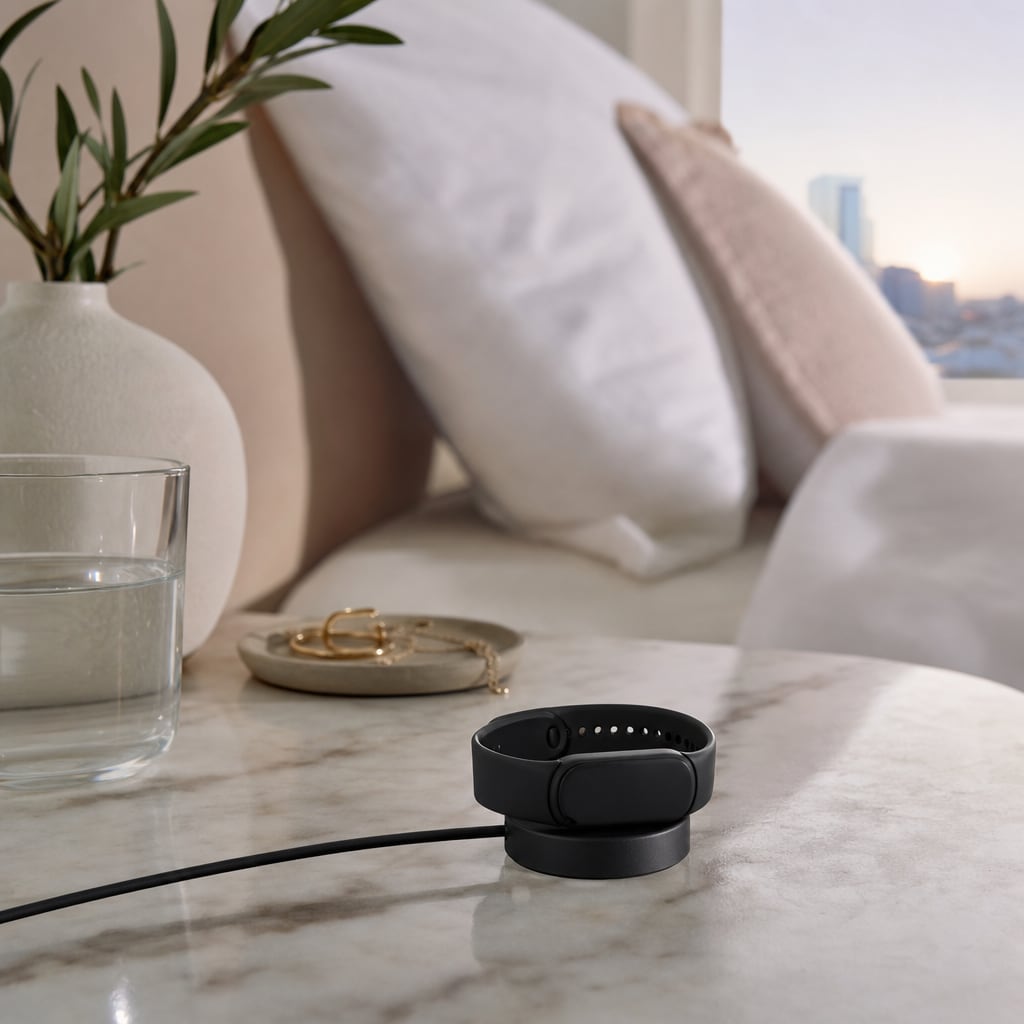
Next I tried the wrist tracker. The sensor straps to your wrist, you sleep with it, and in the morning the app shows you a graph of skin temperature, resting heart rate, breathing, and a fertile-window estimate built out of those signals. The pitch was that I could finally stop testing in the bathroom. The data would just come to me.
It came. It just wasn't the data I needed. Skin temperature is a downstream proxy for core body temperature, which is itself a downstream proxy for the hormones I was actually trying to measure. By the time my wrist registered a temperature shift, ovulation was three days behind me. By the time the app's algorithm decided I'd had a fertile window, I'd already been on the other side of it for the better part of a week.
Knowing what your body did last weekend is not the same as knowing what your body is doing tonight.
A skin sensor reads the shadow of a hormone, not the hormone.
FSA/HSA eligible · 30-day return on unopened kits · 1-year monitor warranty
5.Progesterone strips that confirmed ovulation a week too late

Halfway through year one I learned about PdG, the urine metabolite of progesterone, which is the hormone your ovary releases after the egg has been released. PdG strips were the first thing I'd tried that actually answered the question. They told me whether ovulation had happened. Not the surge. The event itself.
The catch was the timing. PdG strips are dipped seven, eight, nine, ten days after a suspected peak. Which means by the time the strip confirms ovulation, the fertile window has been closed for over a week. It is the right answer to last cycle's question.
I needed all of it. The estrogen build-up that opens the window. The LH surge that says it's now. And the PdG that confirms ovulation actually happened, with a number high enough to support implantation, not just a faint line that crossed an arbitrary threshold. No single strip in any of these kits could tell me all three.
Confirmation a week late is the right answer to the wrong cycle.
FSA/HSA eligible · 30-day return on unopened kits · 1-year monitor warranty
I cried in the bathroom the first cycle I saw a real PdG rise. After two years of strips and apps and guessing, the chart finally said yes.
Sara, Mira Ultra4 owner, Austin TX6.The only kit that measured all four hormones at once: Mira's Ultra4 Hormone Monitor

The Mira Ultra4 was the first thing I'd tried that wasn't built around a single hormone or a single guess.
The kit is a small handheld reader and a wand you pee on, the same shape as a strip. The difference is what happens next. The reader uses fluorescent immunoassay, the same technology my OB's lab used when they ran my Day-3 panel, and gives you back four actual numbers: estrogen (E3G), LH, FSH, and PdG. Not lines. Not smileys. Concentrations, charted day over day, in the same app.
What the four together tell you is the full shape of a cycle. The E3G climb that says the fertile window is opening. The LH peak that says it's now. The PdG rise four to ten days later that says ovulation actually happened. The whole story, not a slice of it. A 2024 peer-reviewed study in Medicina found Mira's at-home readings closely tracked the same hormone patterns the lab gets from a blood draw.
By month two I had the first complete cycle picture I'd had in two years of trying. My LH surge was real. My PdG rise was real. I had ovulated. I just hadn't been able to see it. My OB looked at the chart and said the data was clean enough that we could skip the next round of bloodwork.
The reason every other thing I tried had failed was simple in hindsight. None of them measured a hormone. They measured a line, a guess, a skin temperature, or a single late-cycle event. The Ultra4 measured the hormones.
The fix wasn't another stick. It was a reader that actually measures.
FSA/HSA eligible · 30-day return on unopened kits · 1-year monitor warranty
What actually changed

Mira Ultra4 Hormone Monitor
measures 4 hormones, not 1
- Quantitative readings of E3G, LH, FSH, and PdG, charted daily
- Lab-grade fluorescent immunoassay, the same method clinics use
- Confirms ovulation actually happened, not just the LH surge
- AI app maps your full cycle and tells you which days to test
- FSA/HSA eligible, no subscription, no app paywall

Strip OPKs & period apps
one slice of one hormone
- Qualitative LH lines you have to interpret yourself
- Predictions based on calendar dates, not actual hormones
- Cannot confirm whether ovulation actually happened
- Skin-temperature wearables read ovulation a week after it's over
- Different brand for every question, no unified data
"By month two I had the first complete cycle picture I'd had in two years of trying. My LH surge was real. My PdG rise was real. I had ovulated. I just hadn't been able to see it."From the test
What real Mira users are saying
Mira's verified customer reviews live on the brand's own product page, where they are moderated and tied to verified purchases. We don't reproduce them here.
Read 490+ verified Ultra4 reviews on miracare.com.
Read real reviewsThe fix wasn't another stick. It was a reader that actually measures.
Most cycle advice is shaped like a list of products to try. Better strip. Better app. Better wearable. What none of them share is the ability to actually measure the hormones that drive your cycle. They measure a line, a date, or a temperature shadow.
A strip can tell you that LH spiked. An app can tell you what an average cycle looks like. A wrist tracker can tell you what your skin did last night. The Ultra4 is the only one of the six I tried that gave me back the four numbers a fertility specialist would have ordered. By the time my OB looked at the chart, she didn't need to guess.
If you have spent more than a few cycles asking yourself whether the line is really darker than yesterday's, this is the one I would actually recommend.
Tracking through more than one cycle?
The 30-wand Ultra4 kit lasts most users two full cycles.
Same Mira monitor, same fluorescent immunoassay, same four hormones. 30 wands instead of 20, for the cycles where you want to test through both follicular and luteal phases without rationing strips. FSA/HSA eligible.
Common questions
Do I really need to test four hormones?
If you only want a yes/no on the LH surge, a strip works roughly 60% of the time. If you have an irregular cycle, are over 35, are tracking through perimenopause, or have been trying for more than a few months without confirming ovulation, the four-hormone view is the only one that shows you whether the fertile window is opening (E3G), peaking (LH), and closed by an actual ovulation event (PdG). FSH adds the ovarian-reserve context your doctor would otherwise have to draw blood to see.
How is this different from a strip OPK or Clearblue?
A strip or digital pen reads LH only, qualitatively, and asks you to interpret the result. The Ultra4 reader uses the same fluorescent immunoassay technology that clinical labs use, gives you a quantitative concentration number, and tracks four hormones across the cycle. It is the difference between a thermometer that says "warm" and one that says 101.4°F.
Is the Ultra4 Kit FSA/HSA eligible?
Yes. Both the monitor and the wands are eligible for FSA and HSA reimbursement. Most customers also use Truemed at checkout for a Letter of Medical Necessity if their plan requires one.
What does the kit include and how much does it cost?
The Ultra4 Kit is $249 for the monitor plus 20 wands, or $269 for the monitor plus 30 wands. The monitor is a one-time purchase. Wand refills run roughly $39 to $59 depending on cycle length. There is no subscription, no app paywall, and no recurring fee.
Will it work if my cycle is irregular?
Yes, and irregular cycles are exactly where the Ultra4 outperforms strips. Because the app reads four hormones quantitatively, it doesn't need a 28-day average to know what's happening. It builds your fertile window from your actual hormones, even if your cycle is 23 days one month and 41 the next.
Does the kit diagnose PCOS, endometriosis, or infertility?
No. The Ultra4 is a hormone monitor, not a diagnostic device. Mira's published disclaimer is that results are not intended to diagnose, screen for, or indicate ovarian function, egg supply, or any medical conditions. What it gives you is clean cycle data you can bring to your OB or fertility specialist, which is exactly what most of them want before ordering more bloodwork.
What's the return policy?
Mira offers a 30-day return window on unopened kits and a 1-year manufacturer warranty on the monitor itself. The wands are not returnable once the seal is broken, which is standard for any single-use diagnostic.
The Mira Ultra4 Kit

Cycle data your doctor would have ordered
The Mira Ultra4 Kit starts at $249 for the monitor plus 20 wands, or $269 for the 30-wand kit. Lab-grade fluorescent immunoassay tracking E3G, LH, FSH, and PdG. App included, no subscription, no paywalled features. FSA/HSA eligible.
Try the Ultra4 for one full cycle. If it doesn't show you something your strips and apps couldn't, return the unopened wands within 30 days for a full refund of the kit.
Get my Ultra4 kit →30-day return on unopened kits · 1-year monitor warranty · Free US shipping · FSA/HSA eligible